Table Of Content

As a pioneer for women’s, children’s, workers’ and immigrant rights, Addams’ impact can be seen in every community more than 120 years later. Though Hull House closed its doors in 2012, its programming continues through Metropolitan Family Services. From the 1890s on, Addams became more involved with both progressive social issues and party politics. When Theodore Roosevelt ran for president in 1912, Addams offered her endorsement, seconding his nomination in Chicago during a convention of the Progressive Party. Addams had gained significant power and influence by this point through her advocacy work, yet she still could not vote.
From Hull House to Second City: How Chicago immigrants helped change theater - NPR Illinois
From Hull House to Second City: How Chicago immigrants helped change theater.
Posted: Mon, 19 Dec 2022 08:00:00 GMT [source]
Belva Lockwood and the Precedents She Set for Women’s Rights
At National History Day, a popular competition for middle and high school students supported by NEH, Jane Addams is a favorite subject. In her own time, the celebrated advocate of the poor was famous, then scorned, and, finally, reconsidered and elevated to the pantheon of American heroes. While often troubled by health problems in her youth, Addams's health began to seriously decline after a heart attack in 1926. Today, Addams is remembered not only as a pioneer in the field of social work but as one of the nation's leading pacifists. Addams publicized Hull-House and the causes she believed in by lecturing and writing.
Jane Addams Hull-House Museum
The legend claims that the baby who was born to the couple had red, oily, scaly skin, hoof feet, and horns on its head. Some stories claimed it came out with a full head of hair and smoking a cigar – and that it could speak three different languages and curse in all three of them. Another of Szabelski's favorite stories involves a devoutly Catholic woman on the Near West Side who married an atheist man. People were coming at all hours of the day and night, willing to pay to see the "devil baby" no matter the cost. Busloads of people came all the way from Milwaukee to see the baby. Jane Addams Hull-House Museum is located on the UIC campus, just outside of Student Center East.
( 413-5353 jahh@uic.edu800 S. Halsted Street (M/C Chicago, IL 60607-7017Privacy Policy
During that era, a familiar dichotomy emerged, resonating with contemporary readers. Male members of the University of Chicago Sociology Department tended to maintain a distance from their subjects. They operated from their offices within the university, using coordination for their studies. Women sociologists were often viewed by their male counterparts as mere data collectors. While men regarded the data they gathered and the insights they derived as the ultimate goal, women viewed them as indicators of issues needing resolution. "I have a special connection to this place. This was part of my childhood."
Elected head of the newly formed Women’s Peace Party in 1915, Addams traveled to The Hague in the spring of 1915 to preside over an international conference made up of delegates from both warring and neutral nations. With some of the delegates, she then traveled to the warring nations, meeting foreign ministers, visiting wounded soldiers and grieving mothers, and absorbing the carnage ruining Europe. Returning to the U.S. in July 1915, she spoke to a peace rally at Carnegie Hall before a largely friendly audience of three thousand people. She ended her speech describing the way liquor was doled out to soldiers before bayonet charges. Social reformer Jane Addams and close friend Ellen Gates Starr founded Hull-House, Chicago’s first settlement house, in the Near West Side in 1889. “Residents,” progressive-minded men and women often from comfortable backgrounds, settled at Hull-House and assisted in the many programs offered.
Museum of Motherhood
He also suggested she sell her real estate and work in the Hull-House bakery. Addams and her colleagues at Hull-House were not the only critics of poverty during the Gilded Age and the Progressive era. Henry George’s 1879 denunciation of class division, Progress and Poverty, sold millions of copies worldwide. Edward Bellamy’s 1888 novel, Looking Backward, imagined Boston in the year 2000 where a benevolent government provided universal prosperity and equality.
Explore Other Articles
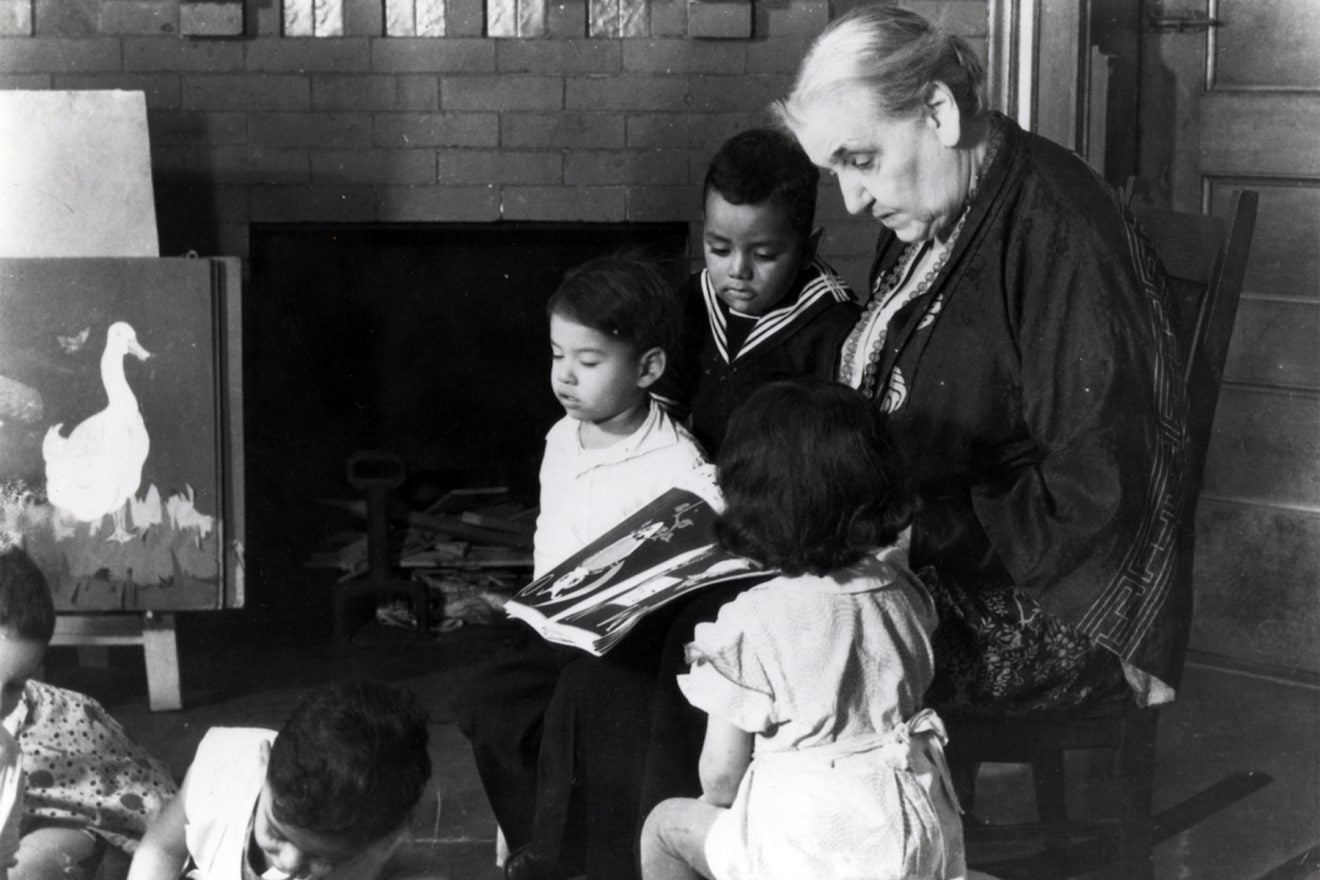
She supported trade unions and strikes but rejected anarchists and the militant Industrial Workers of the World. Skeptical of socialism, she repeatedly criticized the excesses of capitalism. Always, Jane Addams was an unwavering suffragist, connecting the vote to improving the lives of the families in the Nineteenth Ward. Witnessing the damage alcohol did to families in her ward, she remained a convinced prohibitionist. Battling with health problems at an early age, she graduated from the Rockford Female Seminary in Illinois in 1881, and then traveled and briefly attended medical school. On one trip with friend Ellen Gates Starr, the 27-year-old Addams visited the famed Toynbee Hall in London, England, a special facility established to help the poor.
Jane Addams: A Hero for Our Time
When Addams and her group suggested that starving German children deserved to be helped as much as any other child, they were accused of sympathizing with the enemy. Addams watched as one man paid for a spoiled cabbage, then gobbled it down -- neither washed nor cooked. She was horrified that the city would allow its citizens to live in such wretched conditions. Addams next embarked upon a trip abroad, a traditional rite of passage among wealthy young people in the nineteenth century. Accompanied by her stepmother and cousins, Addams sailed to Europe for a two-year tour in 1883.
Museums Dedicated to Extraordinary Women
Agency officials have said the organization will file for bankruptcy protection in the first quarter of this year. The decision to close came after the agency's management and board of trustees worked for two years to reduce operating costs and improve services, officials said. Lizzie Harrington, 32, a project director for a Hull House program that helps low-income people find jobs said employees are emotional and angry about the closing. She received help from Hull House when she was a teenager in foster care and wanted to live independently. The agency said the poor economy increased demand for services but made it difficult to raise enough money to cover the cost of providing them. Other service agencies are expected to step in to help provide services to Hull House clients.
Finding there a group of university undergraduate residents sharing companionship and working for social reform, she and Starr decided to establish such a settlement in a comparable district in Chicago. It was founded in Chicago in 1889 when Jane Addams and Ellen Gates Starr rented an abandoned residence at 800 South Halsted Street that had been built by Charles G. Hull in 1856. Twelve large buildings were added from year to year until Hull House covered half a city block and included a nearby playground and a large camp in Wisconsin. When Theodore Roosevelt ran for re-election as a Progressive Party candidate in 1912, his platform contained many of the social reform policies endorsed by Addams. She supported Roosevelt but disagreed with his decision not to allow African Americans to be part of the party's convention.
Aware of her celebrity, she collected a scrapbook of hundreds of articles extolling her influence. Allen Davis, a sympathetic but critical biographer, writes that Addams was “ambitious,” and “eager for publicity”—an admirable human being, but not just the self-sacrificing saint the public craved. A hero worshipper, she always remained in awe of her father and his hero, Abraham Lincoln. According to her stepmother, Jane was like her father, fiercely ambitious. Simultaneously, she thought of women as fundamentally different from men, even superior—compassionate and intuitive—the keepers of home, the protectors of children, the preservers of peace.
On a visit to the Toynbee Hall settlement house (founded 1884) in the Whitechapel industrial district in London, Addams’s vague leanings toward reform work crystallized. Upon returning to the United States, she and Starr determined to create something like Toynbee Hall. In a working-class immigrant district in Chicago, they acquired a large vacant residence built by Charles Hull in 1856, and, calling it Hull House, they moved into it on September 18, 1889. Eventually the settlement included 13 buildings and a playground, as well as a camp near Lake Geneva, Wisconsin.
One of those wives' tales was purportedly that a baby so severely deformed must have been the spawn of the devil, Szabelski said. It started very simply in 1913, with stories that a baby – possibly a severely deformed baby – would have been left outside the doorstep of the building one day. Addams purportedly took the baby in, and over the next month or so was a mass hysteria that went around not only the building itself, but the whole neighborhood. Her greatest honor came in 1931 when Addams was awarded the Nobel Peace Prize for her work to promote peace worldwide.
Toynbee Hall served one of London’s poorest neighborhoods, offering recreation and educational programs. Her experience inspired her to open a settlement house in Chicago. In the preface of Hull-House Maps and Papers, she mentioned that the residents of the settlement house typically didn't engage in sociological inquiries, which she distinguished from investigations into labor abuses or factory conditions.


No comments:
Post a Comment